
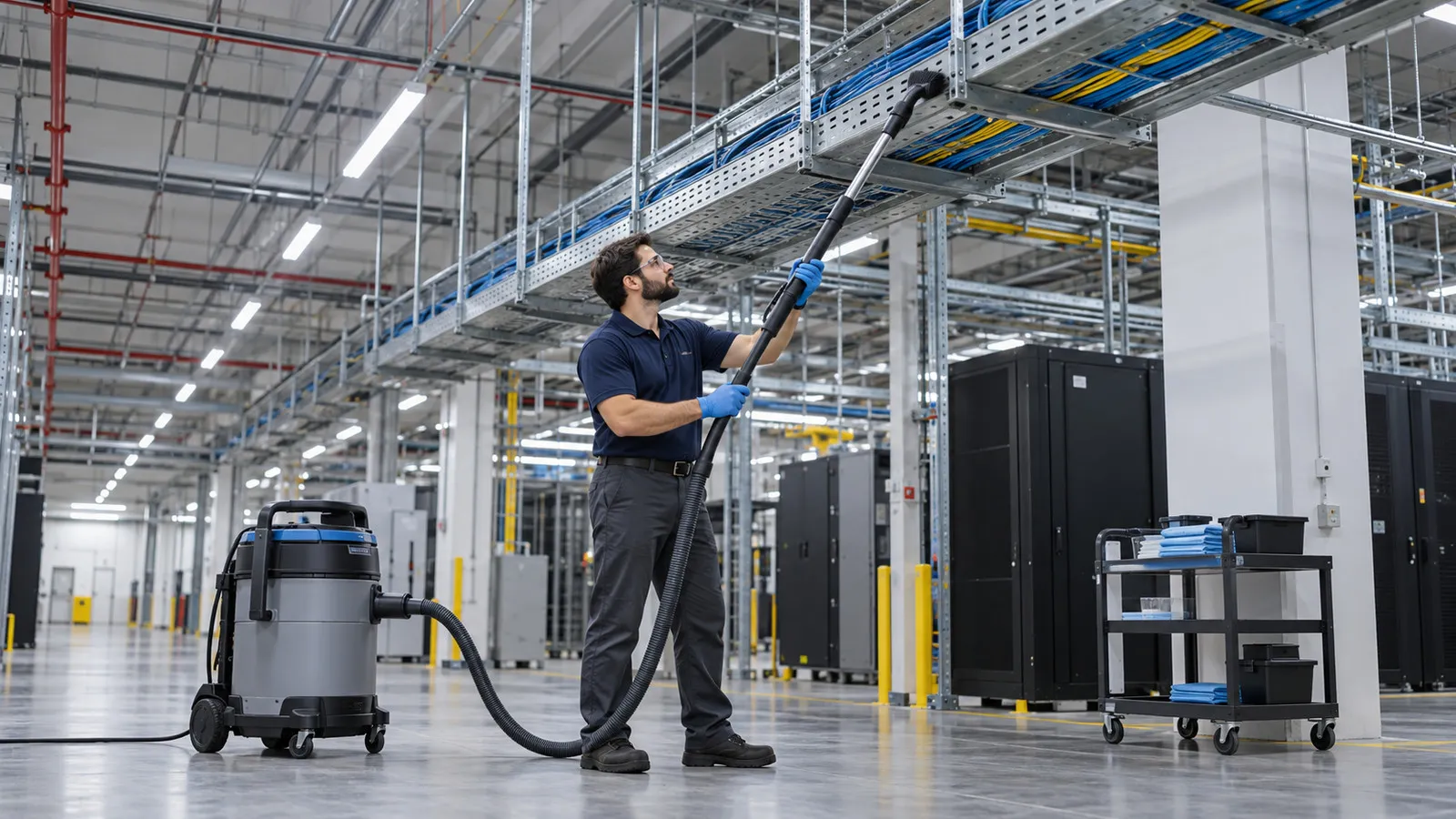
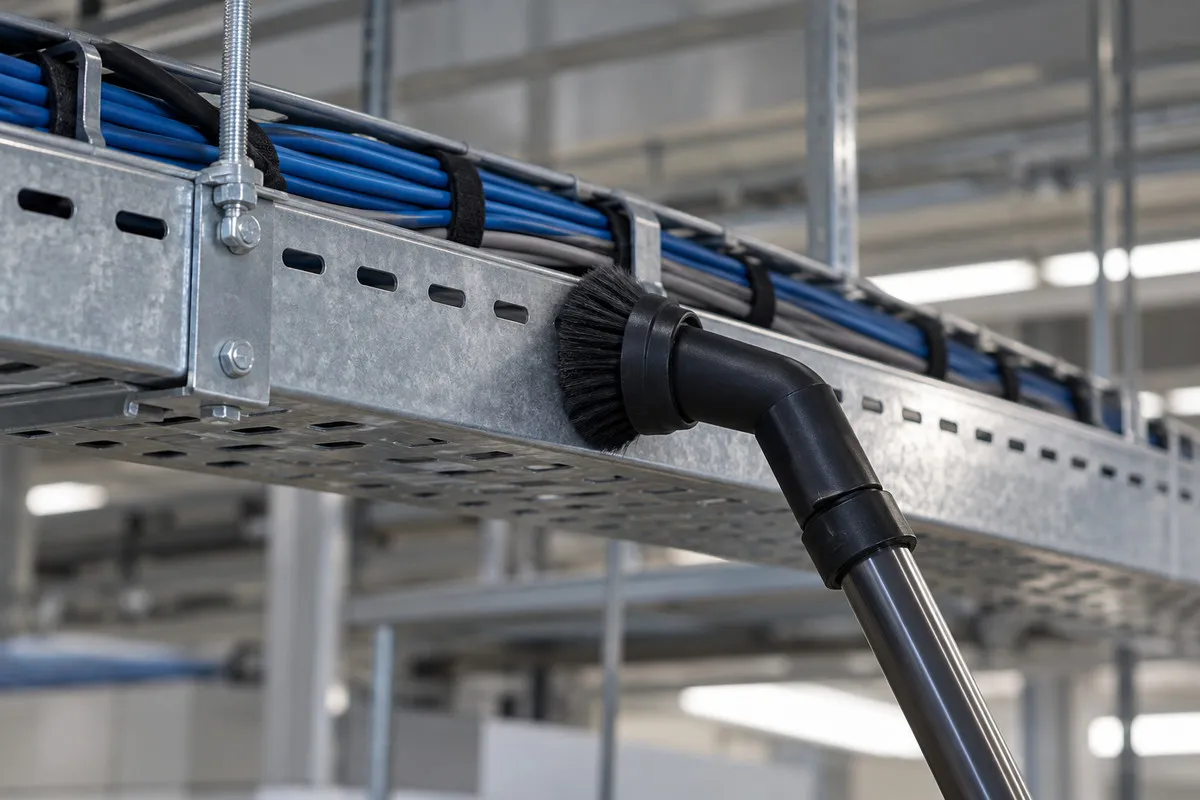
Overhead trays collect dust that nobody sees until it falls onto equipment during a cable pull or an air-handler change. Cleaning them is high-level work above live equipment, so it is planned differently from floor work.
Scope
The outside of cable trays, ladder rack, busway housings, conduit and the top surfaces of cabinets and containment. Dust is captured with HEPA vacuums and extension tools from a platform, a podium or a mobile elevating platform, depending on the ceiling height and what the site permits over live rows.
Exclusions
We do not touch the cables themselves, open tray covers, clean inside busway or disturb anything that is terminated. Lighting, sprinkler heads and smoke detectors are avoided, not cleaned, unless your facilities team specifically includes them.
Coordination
Work over live equipment is scheduled with your operations team and may be limited to certain rows per visit. Access equipment, barrier placement and a spotter on the floor are agreed in advance. Drop sheets are not used over live equipment; capture at the tool is the method.
Where it fits
Cable tray cleaning is usually a line inside a maintenance plan on a longer cycle than floor work, and is part of the pre-commissioning pass in post-construction cleaning. Request a proposal with ceiling heights and whether the rows below are live.
Part of
Data Center Maintenance Cleaning
A recurring cleaning plan for live data halls and support spaces, with a frequency per area set by how it is used, a checklist for each visit, and a record you can show an auditor or a client.
- Frequency set per area from use, traffic and airflow, not a fixed interval
- Written scope and checklist for every visit
- Equipment exteriors, floors, ledges, glazing and door hardware
- Plenum, deep cleaning and construction work quoted separately