
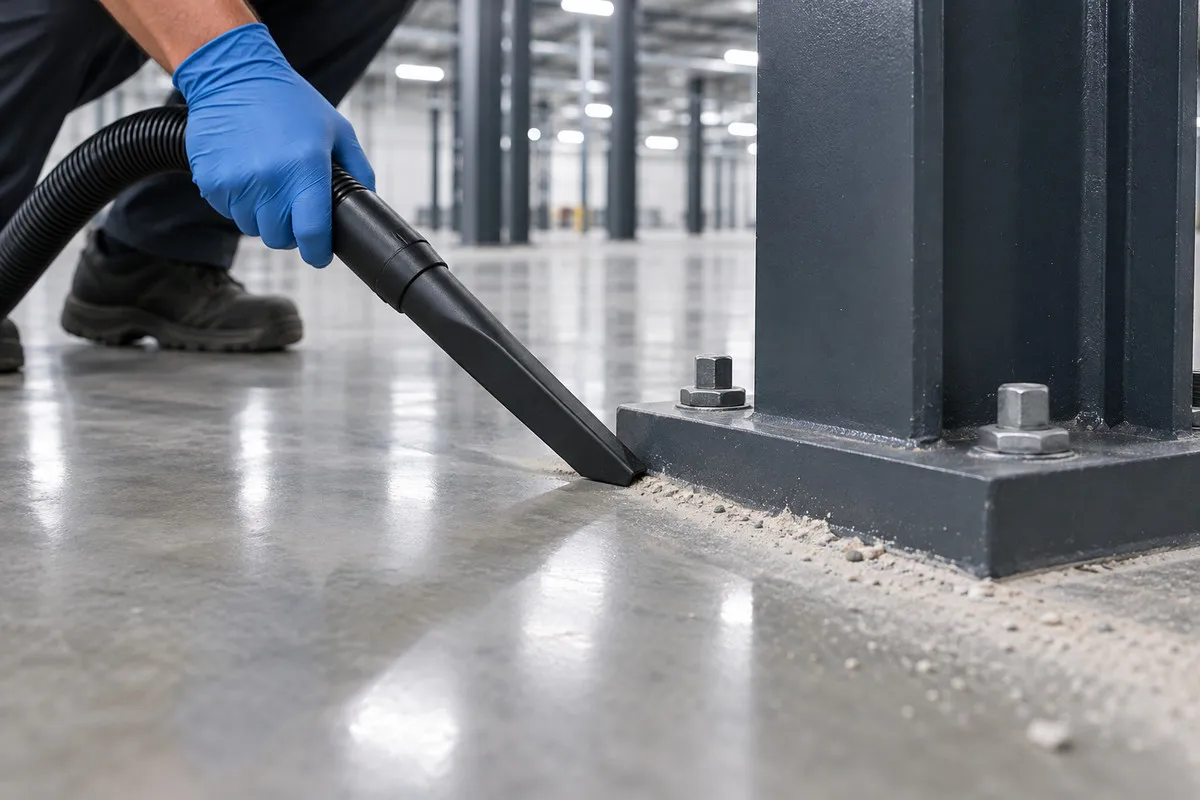
Data center cleaning is priced from a scope, not a rate card. Two halls of the same square footage can be very different jobs, because the cost is driven by what is in them, how they can be accessed, and what has to be recorded. This page sets out those factors so a facility or procurement team can see what a proposal is built from and what moves the number. It does not give price ranges; every figure we quote comes from a walkthrough or a written scope for that site.
The factors
Facility size and cleaning areas
Floor area is the starting point, but the breakdown matters more than the total: how much is white space, how much is grey space and support corridor, and whether the plenum and high-level surfaces are included. Each area is a separate line in the proposal with its own method and time.
Floor type
Raised floor with perforated tiles takes longer than a solid floor of the same size, because tiles are handled individually and the airflow path is part of the scope. Dissipative flooring and coated floors need specific products. Mixed floors mean mixed methods, and the proposal records which is where.
Live versus unoccupied environments
A live hall is cleaned in sections, within change windows, under escort, with open-tile limits and no work over certain rows. That coordination is time. An unoccupied hall before commissioning can be worked continuously, but it usually has far more debris. Neither is cheaper by default; they are different jobs. See post-construction cleaning for how the construction phases are quoted.
Access requirements
Badging lead time, escort availability, working hours, security screening, and whether crews can stage equipment inside or must bring it in and out each visit. Night and weekend windows, where the site requires them, are priced as such.
Required equipment
HEPA-filtered vacuums and low-lint materials are standard. Platforms or mobile elevating work platforms for overhead cable tray cleaning, tile lifters and barriers for plenum work, and any site-mandated product or tool are added where the scope calls for them.
Cleaning frequency
Recurring work is priced per visit against an agreed cadence per area, which is why a maintenance plan and a one-off project are shown as separate lines. The cadence itself is set from the facility’s conditions; the cleaning frequency guide explains how.
Post-construction versus recurring maintenance
Post-construction cleaning is a project with phases and acceptance criteria. Maintenance cleaning is a routine with a checklist. A facility that needs both gets both, with the project priced to the GC’s schedule and the plan priced to start after handover.
Documentation requirements
Visit checklists are standard. Photo records, method statements, exception reports and periodic review meetings are included where a facility or its clients need them for audits, and are costed as the time they take.
Project scheduling
Short lead times, fixed deadlines tied to commissioning dates, or work that must be split across many short windows all affect crew planning and therefore cost. The earlier a date is known, the easier it is to price well.
How a proposal is put together
- Scoping call. Facility type, areas, live or in build, access rules. No infrastructure detail.
- Walkthrough, where possible, to record floor types, routes and restrictions.
- Written proposal. Scope per area, method statement, products and equipment for approval, visit plan, and the price, with recurring and one-off work as separate lines.
- Approval. Nothing is scheduled until the scope and the methods in it are approved.
The cleaning process page walks through each step.
What a proposal will not contain
- A per-square-foot rate applied to the whole building.
- Charges for areas or surfaces that were not scoped.
- Any claim of certification, guaranteed uptime or a cleanliness test result.
Getting a number
The fastest route to a figure is the proposal request form: facility type, status, approximate area and preferred schedule are enough to start. Or call (571) 603-7668 and the account lead will take the details by phone.