
Scope at a glance
- Solid, perforated and grated panels, ramps and edge trim
- HEPA vacuuming first, then finish-appropriate surface cleaning
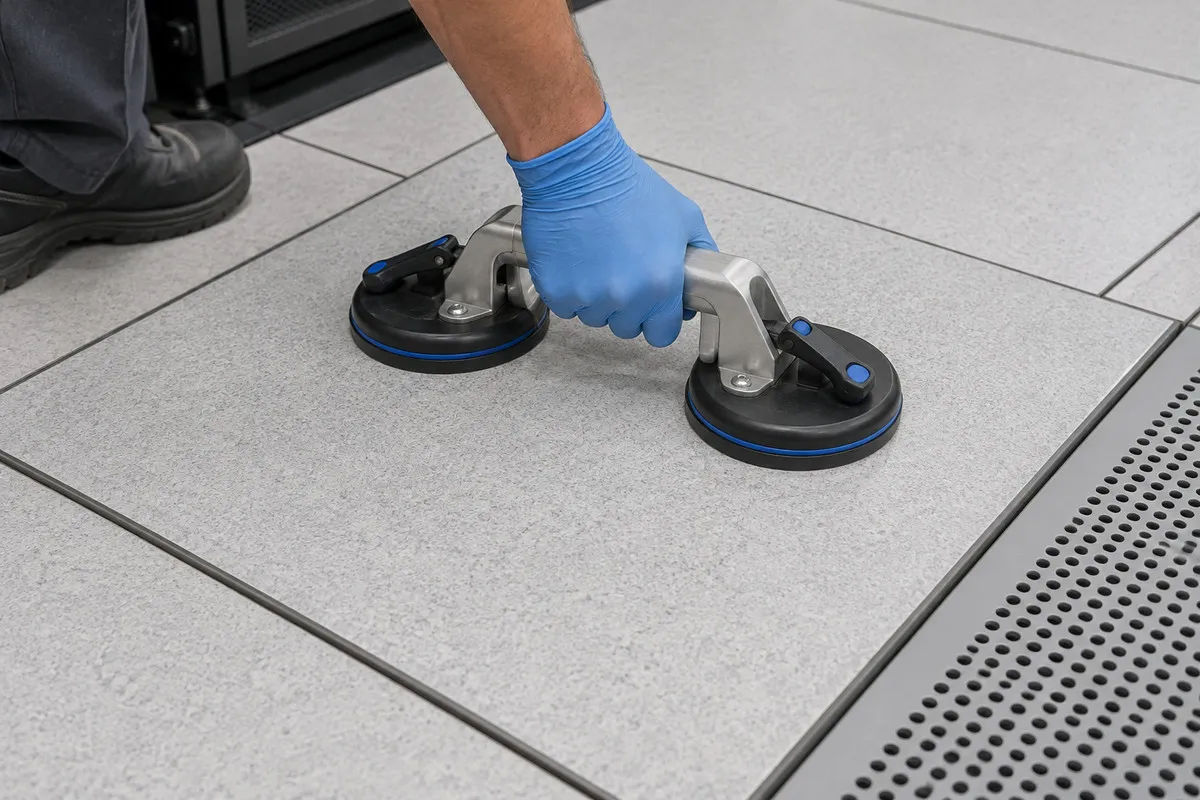
- Tile lifting only with your approval and in agreed bays
- No buffers, no flood mopping, no unapproved sealers
Scope
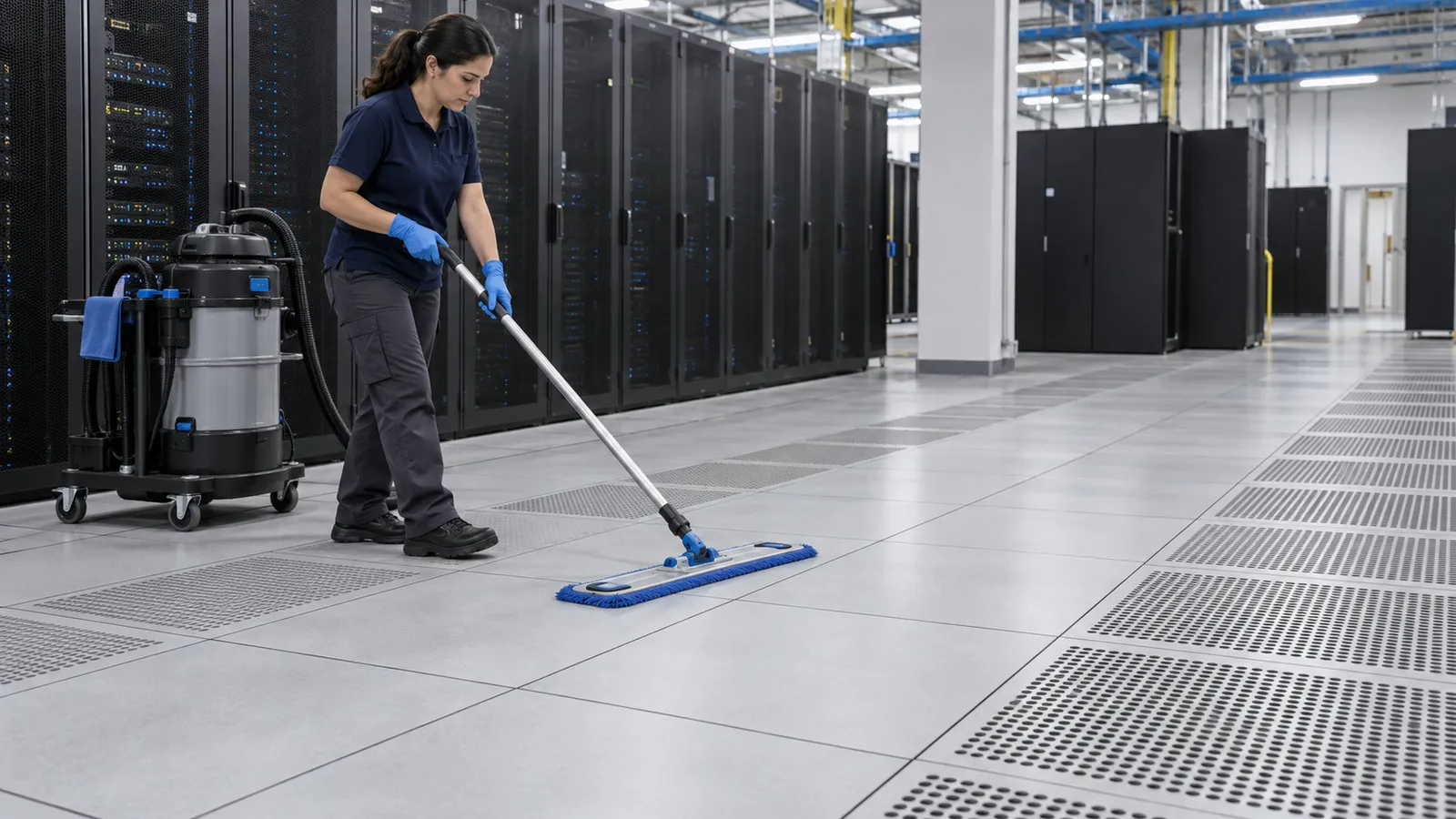
Raised floor cleaning covers the walking surface of an access floor: solid panels, perforated and grated airflow tiles, ramps and the edge trim where the floor meets walls and columns. Loose dust and debris are removed with HEPA-filtered vacuums, then the surface is cleaned with a method chosen for its finish, usually high-pressure laminate, vinyl or a conductive tile, so that nothing damages the surface or leaves a residue that could be drawn into the airflow.
Perforated tiles are treated as part of the airflow path. They are vacuumed on both faces where the site allows lifting, and never cleaned with anything that could clog the perforations.
Aisle edges, baseboards and the strips beside cabinet rows collect the most tracked-in soil and get their own line in the plan, worked within the clearances your site sets. Anything that would need a cabinet moved or a panel lifted is excluded unless separately authorized.
Exclusions
This service stays on top of the floor. We do not use rotary scrubbers, buffers or flood mopping on raised floors, and we do not apply sealers or finishes unless the panel manufacturer’s guidance and your facilities team both say so.
Raised floor cleaning is not subfloor cleaning
This page covers the top of the panels. Cleaning beneath them means lifting tiles, which changes access, airflow and the authorization needed, so subfloor plenum cleaning is a separate line with its own plan. Many facilities schedule the two together so each bay is handled once.
Access and coordination
Tile lifting is agreed in advance: which bays may be opened, how many at a time, and who from your side needs to be present. Open bays are cordoned and closed before the crew moves on. We work aisle by aisle so that technicians and carts are never behind live equipment at the same time as your staff.
Products and equipment
Products are matched to the floor finish and approved by the site. Where you already have a cleaning specification from the floor manufacturer or a previous contractor, we work to it. Where you do not, our proposal names the method and the product class for your approval before the first visit.
What shapes the price
Accessible square footage, the panel finish, the share of perforated tiles, aisle access and whether a controlled-moisture pass is permitted. Subfloor work is quoted separately unless the scope includes it. See what shapes a proposal.
Scheduling
Most halls are cleaned in sections over a series of visits rather than in one night. The proposal sets out the section plan and a visit cadence that fits your change windows. For halls with non-raised areas, such as solid concrete or epoxy floors in support corridors, see floor surface cleaning.
For what sits beneath the panels, and why it matters to airflow, the raised-floor and plenum notes in the cleaning standards guide go into more detail.
Request a proposal with the approximate floor area, the panel type if known, and your preferred working hours.
Component services
Data Center Floor Surface Cleaning
Material-specific cleaning for the hard floors around a data hall: sealed concrete, epoxy, vinyl and conductive or dissipative tile in support corridors, loading areas and staging rooms.
See how every engagement runs, from scoping call to completed checklist
Questions facilities teams ask
Is raised floor cleaning done wet or dry?
Dry first, always. Where the finish and the site allow it, a controlled-moisture pass follows, using a damp low-lint pad rather than a mop and bucket. Nothing is flooded.
How do you handle perforated airflow tiles?
They are vacuumed rather than wiped so the perforations stay clear. If the site permits lifting, both faces are cleaned. Nothing that could leave residue is used on them.
What is the difference between raised floor cleaning and subfloor cleaning?
Raised floor cleaning is the exposed walking surface of the panels. Subfloor cleaning is the plenum beneath them: slab, pedestals, stringers and the outside of containment, reached by lifting tiles under the facility's rules. The underfloor work needs separate authorization, planning and pricing, which is why it is its own service.